
By Ian Weisser, Wisconsin Association of Rail Passengers
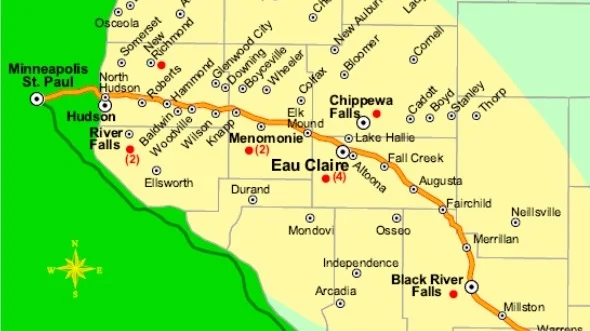
The Chippewa-St. Croix Rail Commission has begun discussions about how to raise the local share of funding required for a proposed Eau Claire-Twin Cities passenger rail service. This line is one of six federal rail corridor ID projects underway in Wisconsin, with four being sponsored by the Wisconsin Department of Transportation and one by Minnesota’s DOT.
At its October 22 meeting, Eau Claire County Administrator Jon Johnson proposed an inter-governmental agreement to detail how much each city or county should budget over the next few years.
The Commission is currently awaiting approval from the Federal Railroad Administration (FRA) of the step one documents submitted earlier this year. Step two will involve writing a Service Development Plan (a business plan) detailing the service, the station stops, costs and financing. Additional later steps are required before the trains can begin rolling.

The Service Development Plan is a significant step that provides the information needed to understand the potential scope of the service and its value, especially the economic impact and return on investment that would justify public investment. Click here to see our explainer, which includes all the steps.
Corridor ID planning has so far used federal grants, with the need for local support acknowledged as a future activity. That future has now arrived.
Step two of the Eau Claire-Twin Cities project is expected to take 2 to 2.5 years. Pending approval from the FRA, the Chippewa-St. Croix Commission’s initial estimate is that step two will cost $3.9 million, with 90% covered by a federal grant. That means about $390,000 will need to be raised from non-federal sources. Future steps will also come with federal grants that must be matched with non-federal money.
The proposed agreement is for Eau Claire County to seek contributions from member counties and cities for their share as costs are incurred over that 2 to 2.5 years. Members of the commission commit to providing their full amount over the 2.5 years. They do not need to have the full amount up front. And that first year’s contribution is expected to be relatively smaller. Johnson said Eau Claire County has done similar agreements on other transportation projects that include multiple jurisdictions.
The actual amounts raised by each county and city remain to be negotiated, and may be reduced by potential contributions from the states of Wisconsin and Minnesota. Johnson offered to circulate draft language for the agreement.
An inter-governmental agreement is a tool to ensure that Eau Claire County, as the lead organization, has the clear authority and committed resources to move the rail project forward. Eau Claire County serves as the administrative and fiscal agent for the Rail Commission, and, as such, is the designated recipient of the grants.


